ISO/IEC and CEN/CENELEC standards
-

Measuring the environmental footprint of artificial intelligence: the voluntary codes of conduct under Article 95 and the available metrics
Among the provisions of Regulation (EU) 2024/1689, the AI Act, that deal with the environment, Article 95 is the only one that addresses all artificial intelligence systems in general terms and, expressly, deployers as well. It imposes no obligations: it provides that the AI Office and the Member States shall facilitate the drawing up of…
-

The energy efficiency of AI systems in European standardisation: what Article 40 of the AI Act requires
On 23 June 2025 the European Commission adopted Implementing Decision C(2025)3871, by which it requested CEN and CENELEC to draft harmonised standards for the high-risk artificial intelligence systems governed by Regulation (EU) 2024/1689, the AI Act. Annex I to the decision identifies ten areas: risk management, governance and quality of datasets, record keeping, transparency and…
-

The environmental management system becomes an obligation for industrial installations: Article 14a of the Industrial Emissions Directive
Directive (EU) 2024/1785 of 24 April 2024, published in the Official Journal of the European Union on 15 July 2024, inserted into Directive 2010/75/EU on industrial emissions Article 14a, under which “Member States shall require the operator to prepare and implement, for each installation falling within the scope of this Chapter, an environmental management system”…
-

Artificial intelligence in production processes with a high environmental impact: what changes for an ISO 14001 certified undertaking
Regulation (EU) 2026/1744 of 8 July 2026, the Digital Omnibus on AI, has been in force since 27 July 2026. It amended Regulation (EU) 2024/1689, the AI Act, and set 2 December 2027 as the date of application of the obligations for the high-risk systems in Annex III and 2 August 2028 as the date…
-

One standard, three designations: the Italian adoption of EN ISO/IEC 42001 on AI management systems
The list of standards published in August 2026, released by UNINFO on 2 September, contains a single entry: UNI CEI EN ISO/IEC 42001:2026, the national edition of the Standard on artificial intelligence management systems. The UNI catalogue entry sets out the coordinates: in force since 30 July 2026, available in Italian since 27 August, replacing…
-

Quality management systems for high-risk AI: what Article 17 requires and how much time is left
Article 17 of the AI Act requires providers of high-risk artificial intelligence systems to put in place a documented quality management system. Until a few weeks ago that obligation would have become enforceable on 2 August 2026, and the technical means of building it did not yet exist. Within a month the two swapped places:…
-
Digital product passport: the presumption of conformity reaches the infrastructure, not the data
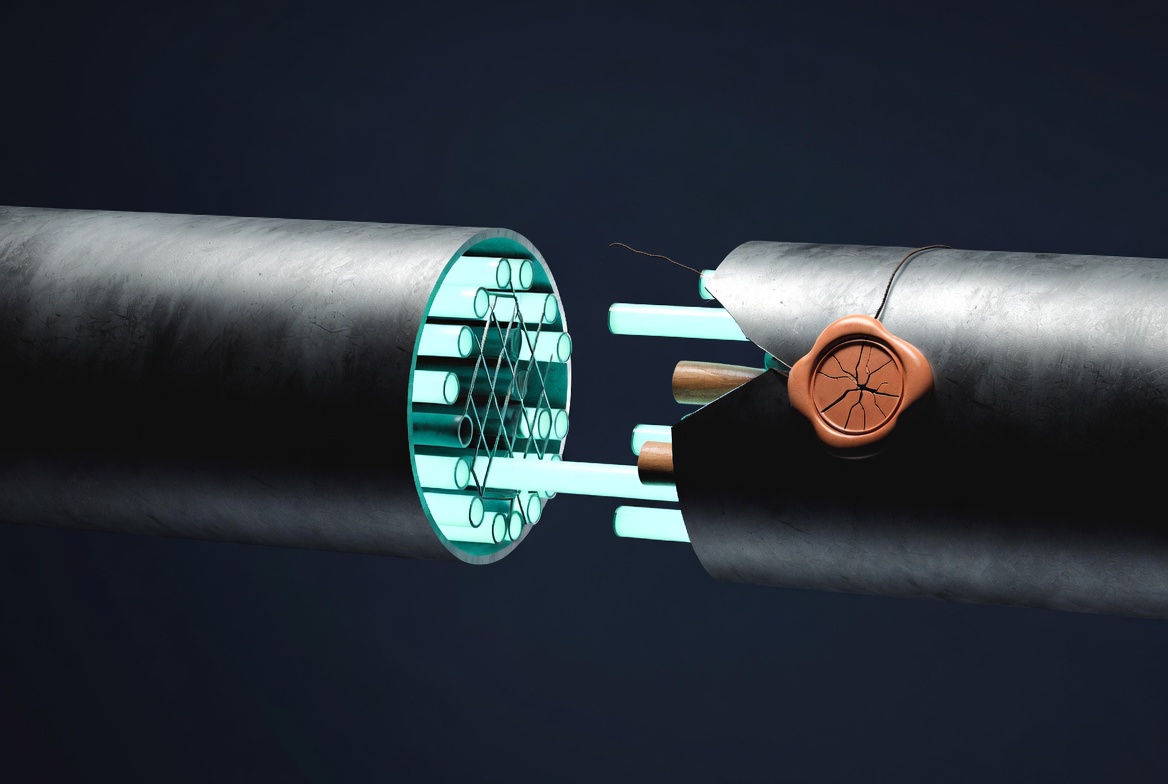
On 15 July 2026 the Official Journal of the European Union published the references of six harmonised standards for the digital product passport, under Commission Implementing Decision (EU) 2026/1736, adopted the previous day. From that date, anyone building a passport that conforms to those standards can rely on the presumption of conformity with the requirements…
-

Marking AI-generated content: a European duty resting on a standard Europe does not control
From 2 August 2026 the transparency obligations in Article 50 of Regulation (EU) 2024/1689, the Artificial Intelligence Act, begin to apply: whoever makes available a system that generates synthetic content must ensure that its outputs are marked in a machine-readable format and detectable as artificially generated or manipulated. The obligation is European, a European legislature…
-

Cyber accountability reaches the board, but the standards to prove it are still out to tender
On 14 July 2026 the Italian National Cybersecurity Agency (ACN) updated its FAQs on the obligations of the management bodies of NIS entities, clarifying that the approval of cybersecurity risk management measures cannot be delegated and that responsibility for the way that function is exercised stays with those who sit on the board. The day…
-

Agentic AI: technical autonomy does not create legal autonomy
Artificial Intelligence systems no longer merely generate content: they act, they send, they modify, they commit. This is the starting point of “Agentic AI: Technical Autonomy, Human Responsibility, and Legal Governance”, the book by Nicola Fabiano published in July 2026, whose thesis is declared from the opening pages and runs through the entire work: technical…