Artificial Intelligence and AI Act
-

Environmental claims generated with artificial intelligence: the ban on generic claims in the Consumer Code
Since 27 September 2026, Article 23 of the Consumer Code (Legislative Decree No 206 of 6 September 2005) has included among the commercial practices considered misleading in all circumstances “making a generic environmental claim for which the trader is not able to demonstrate recognised excellent environmental performance relevant to the claim” (Normattiva). The rule arrives…
-
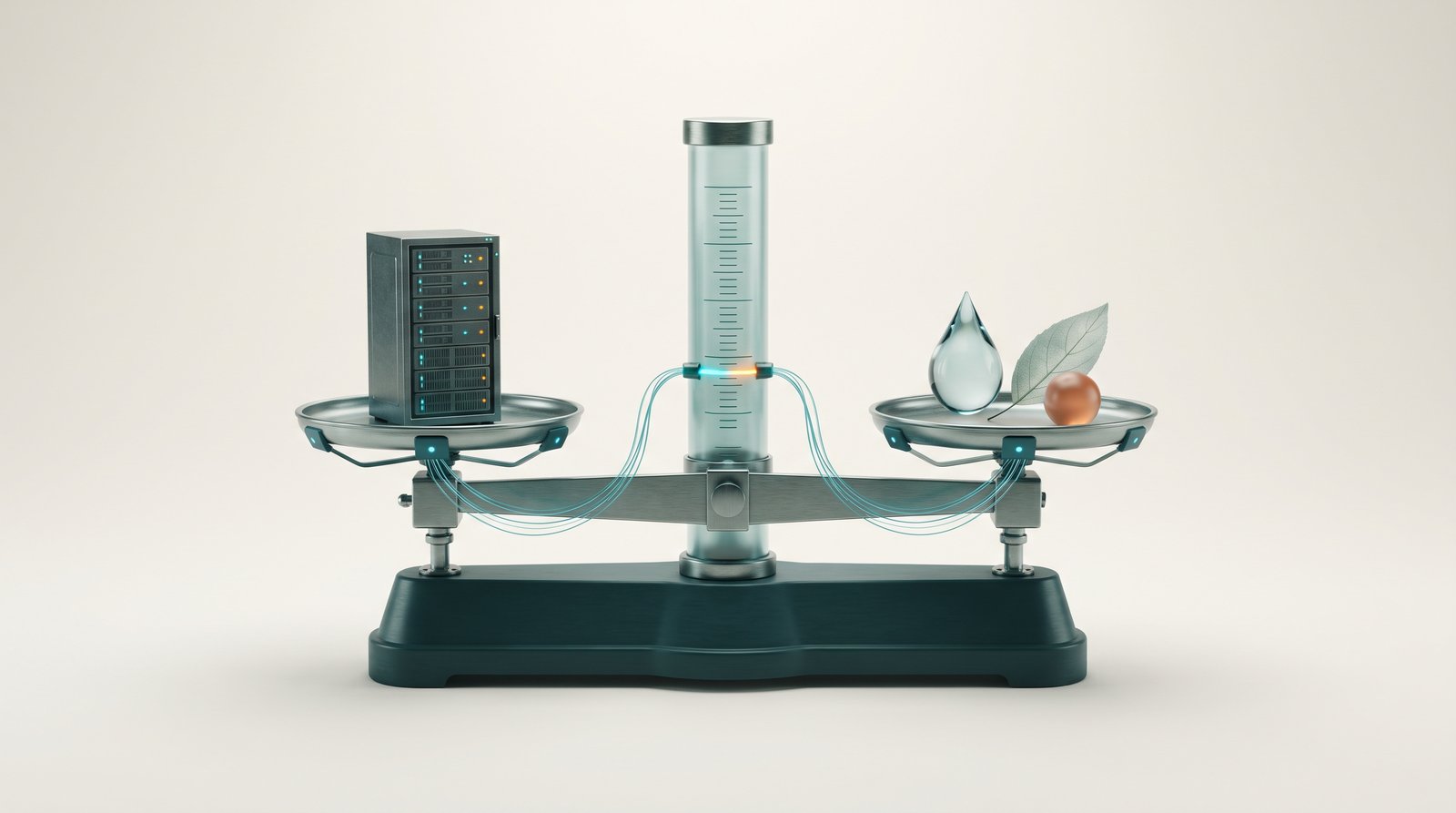
Measuring the environmental footprint of artificial intelligence: the voluntary codes of conduct under Article 95 and the available metrics
Among the provisions of Regulation (EU) 2024/1689, the AI Act, that deal with the environment, Article 95 is the only one that addresses all artificial intelligence systems in general terms and, expressly, deployers as well. It imposes no obligations: it provides that the AI Office and the Member States shall facilitate the drawing up of…
-

Buying artificial intelligence knowing how much it consumes: the energy data of general-purpose models and contracts
Since 2 August 2025, providers placing general-purpose AI models on the market have had to comply with the obligations of Regulation (EU) 2024/1689, the AI Act (European Commission). These include drawing up technical documentation which, under Annex XI, Section 1, point 2(e), comprises the “known or estimated energy consumption of the model” (AI Act Service…
-

Monitoring emissions with artificial intelligence: the data transmitted to the control authority and who is answerable for it
Annex VI to Part Five of the Environmental Code (Legislative Decree No 152 of 3 April 2006) already provides that the continuous monitoring system validates data automatically: point 3.7.2 states that the validation system must validate the elementary values and the hourly averages “automatically, on the basis of predefined verification procedures”, and that the validation…
-

The energy efficiency of AI systems in European standardisation: what Article 40 of the AI Act requires
On 23 June 2025 the European Commission adopted Implementing Decision C(2025)3871, by which it requested CEN and CENELEC to draft harmonised standards for the high-risk artificial intelligence systems governed by Regulation (EU) 2024/1689, the AI Act. Annex I to the decision identifies ten areas: risk management, governance and quality of datasets, record keeping, transparency and…
-

Machines that learn under Regulation (EU) 2023/1230: third-party assessment and evolving behaviour
Regulation (EU) 2023/1230 of 14 June 2023 on machinery, which repeals Directive 2006/42/EC, applies from 14 January 2027 (EUR-Lex). The new Regulation expressly names systems based on machine learning: Annex I, Part A, includes safety components and machinery with fully or partially self-evolving behaviour ensuring safety functions, and Annex III requires the intended evolution of…
-

Artificial intelligence in production processes with a high environmental impact: what changes for an ISO 14001 certified undertaking
Regulation (EU) 2026/1744 of 8 July 2026, the Digital Omnibus on AI, has been in force since 27 July 2026. It amended Regulation (EU) 2024/1689, the AI Act, and set 2 December 2027 as the date of application of the obligations for the high-risk systems in Annex III and 2 August 2028 as the date…
-

Predictive maintenance, energy efficiency and quality control after the Digital Omnibus: when AI is a safety component
Regulation (EU) 2026/1744 of 8 July 2026, the Digital Omnibus on AI, has been in force since 27 July 2026. It amends Regulation (EU) 2024/1689, the AI Act, including in the part that determines which systems integrated into products are high-risk (EUR-Lex). The Regulation supplemented the definition of “safety component” in Article 3, point (14),…
-

Biometric data and dignity: why a lost fingerprint cannot be replaced
On 26 February 2026 the Italian Data Protection Authority (Garante) fined an employer that recorded attendance by means of its employees’ fingerprints, reiterating that “the legal framework in force does not permit the processing of employees’ biometric data for the purpose of recording attendance at work” (Garante). It is the same principle affirmed in February…
-

EU KIDS Act: gradual access to social media and the reversal of the burden of proof
On 17 September 2026 the European Commission adopted the proposed EU KIDS Act: a Union wide minimum age for autonomous social media accounts, safety by design obligations, age assurance and a reversed burden of proof.