Data protection and GDPR
-

Minors, AI and platforms: the default, the design and the prohibition
Within a single week three different authorities, applying three different regulations, have intervened on the same object: the child in front of an interface designed to hold their attention. On 9 July 2026 the Italian Data Protection Authority fined Character Technologies Inc. 158,000 euros, identifying concerns regarding safeguards for minors and age verification mechanisms. On…
-

When data stops being personal: the EDPB on anonymisation and web scraping for generative AI
On 8 July 2026, during its latest plenary, the European Data Protection Board (EDPB) adopted guidelines on anonymisation and guidelines on web scraping in the context of generative AI, together with the final version of its guidelines on the processing of personal data through blockchain technologies. The two new documents are presented as separate texts,…
-

AI Natural Language Processing Engineer: language has become the interface of AI, and someone is needed who can handle it
Ever since we have been talking to machines, language has become the universal interface of Artificial Intelligence, and those who can build systems that understand and generate language have joined the European list of the most needed profiles. But language carries culture, variety and inequality with it: the craft of the AI Natural Language Processing…
-

AI Data Scientist: the Washington figures, the European demand and the method that makes the difference
It is the only Artificial Intelligence craft that US federal statistics record as a standalone occupation: a median pay of 112,590 dollars and a projected growth of thirty-four per cent over the decade. And in Europe? The needs analysis puts it at the top of the most sought-after roles. But behind the most overused title…
-

AI Data Engineer: data do not move on their own. The profile Europe seeks and struggles to find
Every Artificial Intelligence model lives on the data that someone has collected, cleaned, transformed and served: that someone is the AI Data Engineer, whom the European needs analysis places among the most needed roles and whom businesses, according to the Union’s statistics, genuinely struggle to find. Inside a craft of architectures, data pipelines and a…
-

Records of processing and SMEs: the simplification of Article 30(5) GDPR seen by the EDPB and EDPS
Extending the exemption from the obligation to keep a record of processing activities to organisations with fewer than 750 employees: this is the Commission’s proposal on which the EDPB and the EDPS pronounced in Joint Opinion 01/2025. Favour for the lightening, but with a warning: the register is not just an obligation, it is a…
-
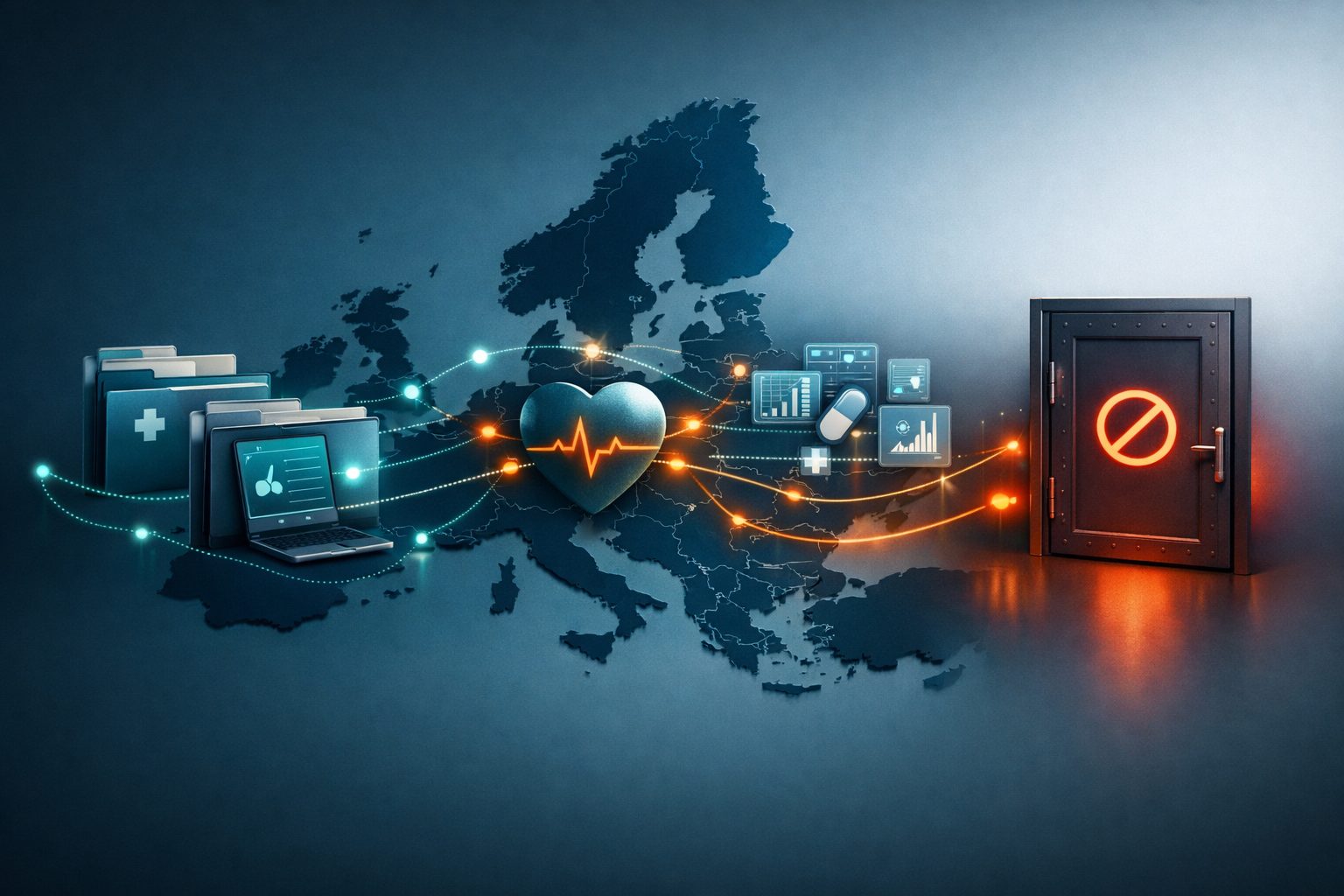
EHDS: the European Health Data Space between primary use, secondary use and prohibited uses
Regulation (EU) 2025/327 establishes the European Health Data Space: the first common European sectoral data space, with staggered application from 26 March 2027. Interoperable health records for care, access bodies for research, and a catalogue of expressly prohibited uses. The essential coordinates of a regulation set to reshape European digital health. With Regulation (EU) 2025/327…
-

Facial recognition in Italian cities: the moratorium extended to 2027 and the AI Act’s limits
After Trento, the Garante scrutinised Rome’s metro and Turin’s “intelligent” cameras. Meanwhile, the Italian moratorium on the use of facial recognition in public places has been extended to 31 December 2027, and the AI Act has set directly applicable prohibitions, from the scraping of facial images to real-time remote biometric identification. The updated map of…
-

The EDPB DPIA template: towards a harmonised impact assessment across the European Economic Area
On 14 April 2026 the EDPB adopted a template for data-protection impact assessments, put out for public consultation until 9 June 2026: predefined fields, an explanatory document and the ambition to become the single model — or the “meta-template” — of the authorities across the entire EEA. What changes, in practice, for controllers and DPOs?…
-

The Digital Omnibus and the GDPR: the EDPB and EDPS doubts on the new definition of personal data
While the Digital Omnibus on AI has reached the finish line, the twin package affecting the GDPR and ePrivacy is still on its way, and carries the most delicate question: the amendment of the definition of personal data. In Joint Opinion 2/2026 of 10 February 2026, the EDPB and the EDPS open to simplification but…