AI Security Specialist

Immagine creata con IAAI-generated image

AI Security Specialist: attacks that resemble no other, and those who must stop them

Prompt injection, data poisoning, model evasion: Artificial Intelligence systems have an attack surface of their own, so specific that it has earned dedicated taxonomies from NIST, the OWASP project and MITRE. Guarding it is the craft of the AI Security Specialist, in a European market where security specialists are already in short supply, even before AI makes them indispensable.

At the top of the risk ranking for generative-AI applications there is not a traditional programming flaw, but an attack that three years ago did not even have a settled name: “A Prompt Injection Vulnerability occurs when user prompts alter the LLM’s behavior or output in unintended ways”, so the Open Worldwide Application Security Project (OWASP) dedicated to generative AI (OWASP). It is the sign of something new: AI systems err, and are attacked, in ways that resemble no other. Hence the profile of the AI Security Specialist, responsible for protecting AI systems from threats, vulnerabilities and attacks across the entire life cycle.

Dedicated taxonomies: NIST and MITRE

That the security of AI does not coincide with traditional cybersecurity is attested by the most authoritative sources. The National Institute of Standards and Technology (NIST), in the report of its Trustworthy AI series devoted to adversarial machine learning, declares: “This NIST Trustworthy and Responsible AI report provides a taxonomy of concepts and defines terminology in the field of adversarial machine learning (AML)” (NIST): poisoning of the training data, evasion at inference time, attacks on the confidentiality of data and models, abuse of generative capabilities. And the MITRE ATLAS knowledge base presents itself as “a public knowledge base of adversary TTPs targeting AI systems”, cataloguing tactics and techniques observed against real systems.

The practice of defence

In practice, four safeguards define the mature profile. The modelling of specific threats: mapping the system, from the data to the interfaces, onto the dedicated taxonomies, identifying the scenarios relevant to the concrete case. Controlled offensive testing: simulated-attack tests and red-teaming campaigns on generative applications, treating the model as an untrusted component until proven otherwise; for models with systemic risk, indeed, adversarial testing is an express obligation of Regulation (EU) 2024/1689 (the AI Act). Defence in depth: filters on inputs and outputs, privilege separation for software agents, human approval for high-impact actions, and telemetry and abuse detection, because the security of the model is not enough if the system around it is defenceless. Finally, alignment with governance: contributing to the risk management and documentation required by the regulatory framework, including, for the entities covered by it, the obligations of the European rules on the cybersecurity of networks and information systems.

A market in structural deficit

As for demand, the European context starts from a documented deficit: “In 2023, 57.5% of EU enterprises that recruited or tried to recruit ICT specialists had difficulties in filling ICT vacancies”, with peaks of 72.41 per cent in Germany (Eurostat). Onto this general deficit grafts the transformation brought by AI: the European Centre for the Development of Vocational Training (CEDEFOP) describes it as “the next general-purpose technology reshaping labour markets, jobs and skills” (CEDEFOP), and security competences are among those the transformation makes most critical, because every new AI application is, at the same time, a new attack surface. Those who can unite the craft of security with the specificities of machine learning stand, today, at the intersection of two scarcities.

The Italian benchmark

The UNI 11621-8:2026 standard recognises the AI Security Specialist as a standalone profile among the twelve of AI, with competences set out according to the methodology of the European e-Competence Framework, the UNI EN 16234-1 standard; the assessment and certification of professional competences take place at bodies accredited under the UNI CEI EN ISO/IEC 17024 standard, within the framework of Accredia Information Circular DC No. 21/2026.

Conclusions

The AI Security Specialist defends systems that err in new ways from adversaries that attack in new ways: this is why the discipline has given itself dedicated taxonomies and knowledge bases, and why the profile deserves the standalone recognition the Italian standard has assigned it.

In the light of the above, one wonders whether organisations will extend to AI systems the security maturity so laboriously built on traditional software, before the adversaries – as happens ever more often – see to demonstrating its necessity.


AI AnthropoCosmic In evidenzaAI AnthropoCosmicUn progetto internazionale per un’IA a servizio dell’Uomo, dell’Ambiente e del Cosmo, che mette al centro la dignità della persona nella progettazione dei sistemi. Leggi l’articoloAI Open Mind AI AnthropoCosmic FeaturedAI AnthropoCosmicAn international project for an AI at the service of humanity, the environment and the cosmos, placing human dignity at the centre of system design. Read the articleAI Open Mind Agentic AI In evidenzaAgentic AILimiti prima dell’azione, evidenze durante, responsabilità dopo. Il volume di Nicola Fabiano sulla governance dei sistemi agentici, con la prefazione di Antonino Caffo.Capitolo 16 a cura dell’Avv. Valentina Grazia SapuppoLeggi l’articolo Agentic AI FeaturedAgentic AILimits before the action, evidence during, responsibility afterwards. Nicola Fabiano’s book on the governance of agentic systems, with a preface by Antonino Caffo.Chapter 16 by Valentina Grazia SapuppoRead the article
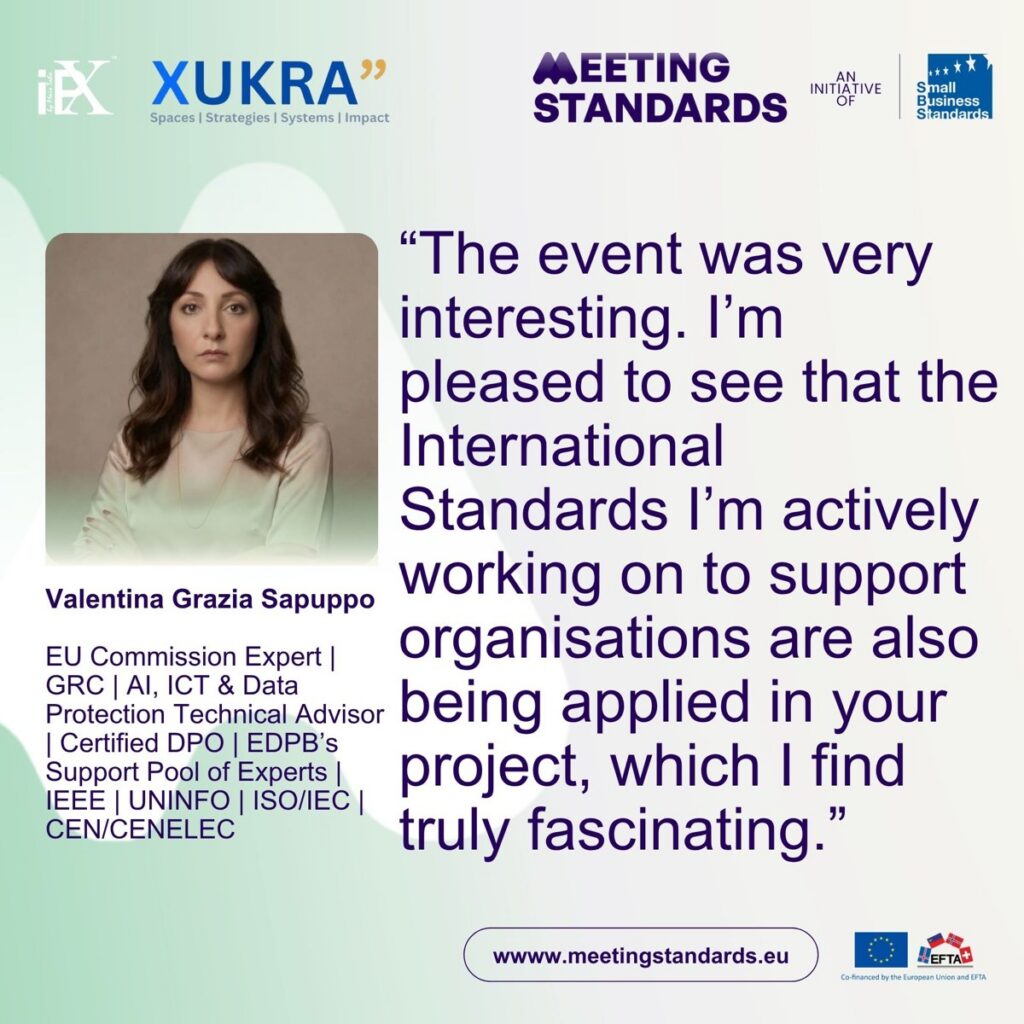
Testimonianza di Valentina Grazia Sapuppo per XUKRA, Meeting Standards 2026 TestimonianzaXUKRA” · Meeting StandardsValentina Grazia Sapuppo ha portato la sua testimonianza al workshop online di XUKRA” nell’ambito di Meeting Standards, l’iniziativa di Small Business Standards che avvicina le PMI europee alla normazione.30 giugno 2026, online · Meeting Standards, 4ª edizioneXUKRA”Meeting StandardsIniziativa europea di Small Business Standards - SBS
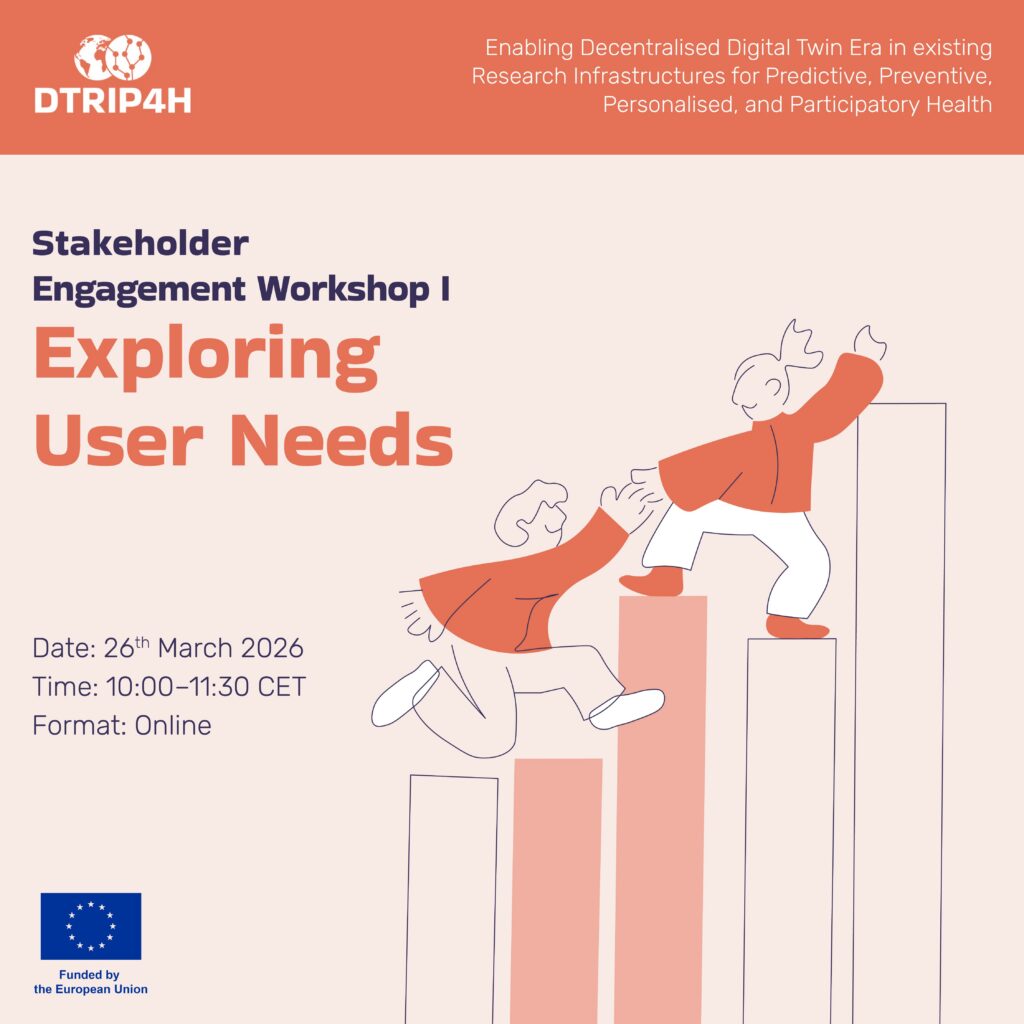
Locandina del workshop DTRIP4H Exploring User Needs, 26 marzo 2026PanelDTRIP4H · Gemelli digitali per la saluteValentina Grazia Sapuppo tra i main panellist del workshop «Exploring User Needs for DDTE: Ethics, Implementation, and the Future of Responsible Simulation» del progetto europeo DTRIP4H, con un intervento su governance, conformità e responsabilità. A giugno ha contribuito come esperto legale al workshop sui fabbisogni formativi.26 marzo e 23 giugno 2026, online · Horizon EuropeIl workshopLa registrazioneDTRIP4H
Intervista Radio Radio IntervistaLegge e colossi del digitaleIl patteggiamento di Meta sui minori non è una condanna. Stati Uniti ed Europa seguono strade opposte, e sugli agenti di IA resta aperta la domanda su chi risponde.Un Giorno Speciale su Radio Radio, con Alessio De Paolis · audio dal minuto 2:26:00Ascolta l’intervistaGuarda il videoLeggi l’articolo
Digital Omnibus ContributoIl Digital Omnibus cambia l’AI ActNuove scadenze per i sistemi ad alto rischio e un chiarimento sull’obbligo di AI literacy: più tempo per adeguarsi, nessuno sconto sulla preparazione di persone e processi.Articolo scritto per il blog di SkillaLeggi su Skilla
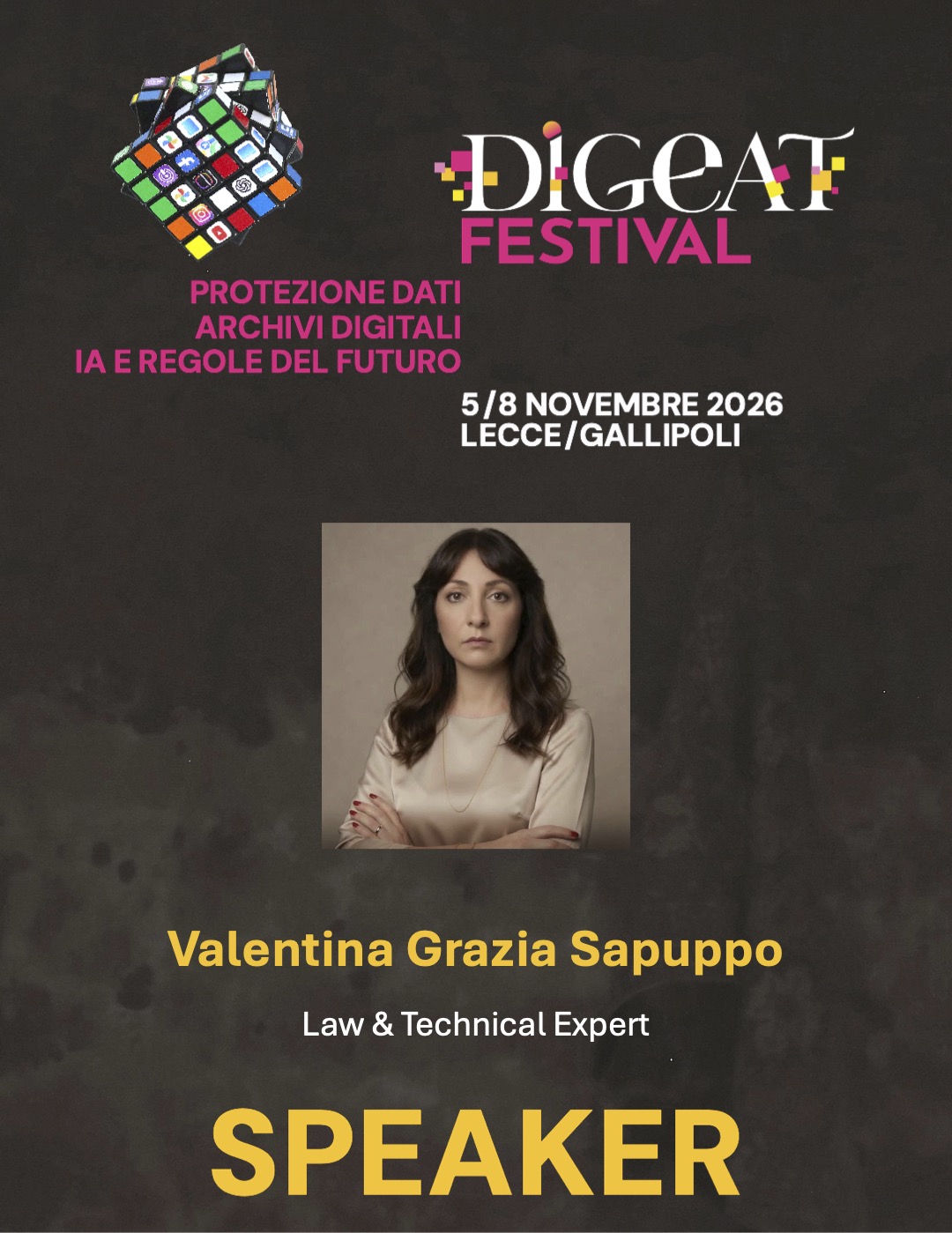
Digeat Festival 2026 SpeakerDigeat Festival 2026Valentina Grazia Sapuppo tra i relatori del festival dedicato a protezione dei dati, archivi digitali e regole del futuro. Interviene sul tema «Le regole dell’IA: nuove leggi o principi del diritto?».Venerdì 6 novembre 2026, ore 16:30, Ex Convitto Palmieri, LecceL’interventoLa scheda relatriceIl festival
AI AnthropoCosmic 2026AI AnthropoCosmic 2026Valentina Grazia Sapuppo nel progetto dell’Università Pontificia Salesiana su Persona, Ambiente e Cosmo: moderazione della sessione mattutina del Convegno finale e intervento negli AI Laboratori del Domani su commercio elettronico e IA.14 novembre 2026, online · 28 novembre 2026, Università Pontificia Salesiana, RomaIl convegnoL’incontroIl contributoIl comitato scientificoLa relatriceIl progetto
Testimony by Valentina Grazia Sapuppo for XUKRA, Meeting Standards 2026 TestimonyXUKRA” · Meeting StandardsValentina Grazia Sapuppo’s testimony for the XUKRA” online workshop, part of Meeting Standards, the Small Business Standards initiative bringing European SMEs closer to standardisation.30 June 2026, online · Meeting Standards, 4th editionXUKRA”Meeting StandardsEuropean initiative by Small Business Standards - SBS
Poster of the DTRIP4H workshop Exploring User Needs, 26 March 2026PanelDTRIP4H · Digital twins for healthValentina Grazia Sapuppo among the main panellists of the workshop “Exploring User Needs for DDTE: Ethics, Implementation, and the Future of Responsible Simulation” of the EU project DTRIP4H, speaking on governance, compliance and accountability. In June she contributed as a legal expert to the workshop on training needs.26 March and 23 June 2026, online · Horizon EuropeThe workshopThe recordingDTRIP4H
Interview Radio Radio InterviewLaw and the digital giantsThe Meta settlement on minors is not a conviction. The United States and Europe take opposite paths, and on AI agents the question of who answers remains open.Un Giorno Speciale on Radio Radio, with Alessio De Paolis · audio from 2:26:00 · in ItalianListen to the interviewWatch the videoRead the article
Digital Omnibus ContributionThe Digital Omnibus reshapes the AI ActNew deadlines for high-risk systems and a clarification on the AI literacy duty: more time to comply, no discount on preparing people and processes.Article written for the Skilla blog, in ItalianRead on Skilla
Digeat Festival 2026 SpeakerDigeat Festival 2026Valentina Grazia Sapuppo among the speakers of the festival on data protection, digital archives and the rules of the future. She takes part in the panel «The rules of AI: new laws or principles of law?».Friday 6 November 2026, 16:30, Ex Convitto Palmieri, LecceThe panelSpeaker profileThe festival
AI AnthropoCosmic 2026AI AnthropoCosmic 2026Valentina Grazia Sapuppo in the project of the Università Pontificia Salesiana on Person, Environment and Cosmos: moderator of the morning session of the closing conference and speaker at the AI Laboratori del Domani on e-commerce and AI.14 November 2026, online · 28 November 2026, Università Pontificia Salesiana, Rome · sessions held in ItalianThe conferenceThe sessionThe contributionThe scientific committeeSpeakerThe project