Ponte sospeso in costruzione su un abisso blu notte con due piloni teal e un sigillo ambra sulla sponda opposta

Immagine creata con IAAI-generated image

Cyber Resilience Act, the first European standards: EN 40000-1-1 and EN 40000-1-2 set vocabulary and risk management

On 19 November 2026 the European Committee for Standardization (CEN) and the European Committee for Electrotechnical Standardization (CENELEC) announced the availability of the first two European standards developed in support of Regulation (EU) 2024/2847 (Cyber Resilience Act, CRA): EN 40000-1-1, on vocabulary, and EN 40000-1-2, on principles, product risk management and lifecycle activities. They are the first deliverables of standardisation request M/606, which the European Commission addressed to CEN, CENELEC and the European Telecommunications Standards Institute (ETSI) by implementing decision C(2025) 618 of 3 February 2025 and which, according to the Commission page on CRA standardisation, covers 41 standards, both horizontal and product-specific. In July we wrote that cyber accountability had reached the boardroom while the standards needed to demonstrate it had yet to be written. The first two now exist, but on their own they do not yet give rise to a presumption of conformity.

A common vocabulary and a method for risk

According to the CEN-CENELEC announcement, EN 40000-1-1 sets out a common set of terms and definitions for the whole EN 40000 series, so that experts and manufacturers from different sectors give the same concepts the same meaning. EN 40000-1-2 concerns the identification, assessment and management of cybersecurity risks across the entire product lifecycle, from design to decommissioning. It lays down general principles and baseline risk management requirements, on which more detailed measures are intended to build. These are horizontal standards and contain no activities or elements specific to individual product categories.

Both standards were developed by Working Group 9 of the joint technical committee CEN/CLC/JTC 13, which is responsible for horizontal cybersecurity standards for products with digital elements, with the secretariat held by the Dutch standards body NEN. According to CEN-CENELEC, more than 450 committee members from 28 national standardisation bodies and 17 liaison organisations took part in the work.

Risk assessment under Article 13

The link with the Regulation runs through Article 13(2), which requires manufacturers to undertake «an assessment of the cybersecurity risks associated with a product with digital elements» and to take its outcome into account during the planning, design, development, production, delivery and maintenance phases. Article 13(3) adds that the assessment is to be documented and updated. EN 40000-1-2 addresses precisely this duty, treating cybersecurity as an activity that accompanies the product throughout its life rather than as a final check before it is placed on the market. Manufacturers thus have a shared European reference on which to base their risk assessment and its documentation, instead of methods developed in-house.

Available does not mean harmonised

A distinction is needed, however. Under Article 27(1) of the Cyber Resilience Act, products and processes that conform to harmonised standards, or parts of them, whose references have been published in the Official Journal of the European Union are presumed to conform to the essential requirements in Annex I covered by those standards. The CEN-CENELEC announcement makes no mention of such publication and states that the standards are obtained through national standards catalogues, according to national publication schedules. Until they are cited in the Official Journal, applying EN 40000-1-2 remains a practice that can be documented, not a presumption that can be relied on before market surveillance authorities. This is the path already taken, under Regulation (EU) 2024/1689 (AI Act), by EN 18286:2026 on quality management systems, cited as a harmonised standard by Commission Implementing Decision (EU) 2026/2274 published on 14 October 2026. Article 27(2) of the CRA also empowers the Commission to adopt implementing acts establishing common specifications, under the conditions laid down there.

The timetable

Under Article 71(2), the Regulation applies from 11 December 2027. The obligation in Article 14 to report actively exploited vulnerabilities and severe incidents has applied since 11 September 2026, as we noted when it took effect, and Chapter IV, on the notification of conformity assessment bodies, has applied since 11 June 2026.

On the standardisation side, CEN-CENELEC names the final draft FprEN 40000-1-3 and the first product-specific (vertical) standards as the next steps, while further horizontal standards on vulnerability handling and generic cybersecurity requirements are in development. The largest part of request M/606 therefore remains to be completed, a little more than a year before the Regulation applies in full.

With EN 40000-1-1 and EN 40000-1-2, the Cyber Resilience Act now has a common vocabulary and a European method for product risk management. The presumption of conformity under Article 27 still depends on publication of the references in the Official Journal of the European Union, and the product standards that will translate the essential requirements for individual categories are still being prepared.

Author: Valentina Grazia Sapuppo


AI AnthropoCosmic In evidenzaAI AnthropoCosmicUn progetto internazionale per un’IA a servizio dell’Uomo, dell’Ambiente e del Cosmo, che mette al centro la dignità della persona nella progettazione dei sistemi. Leggi l’articoloAI Open Mind AI AnthropoCosmic FeaturedAI AnthropoCosmicAn international project for an AI at the service of humanity, the environment and the cosmos, placing human dignity at the centre of system design. Read the articleAI Open Mind Agentic AI In evidenzaAgentic AILimiti prima dell’azione, evidenze durante, responsabilità dopo. Il volume di Nicola Fabiano sulla governance dei sistemi agentici, con la prefazione di Antonino Caffo.Capitolo 16 a cura dell’Avv. Valentina Grazia SapuppoLeggi l’articolo Agentic AI FeaturedAgentic AILimits before the action, evidence during, responsibility afterwards. Nicola Fabiano’s book on the governance of agentic systems, with a preface by Antonino Caffo.Chapter 16 by Valentina Grazia SapuppoRead the article
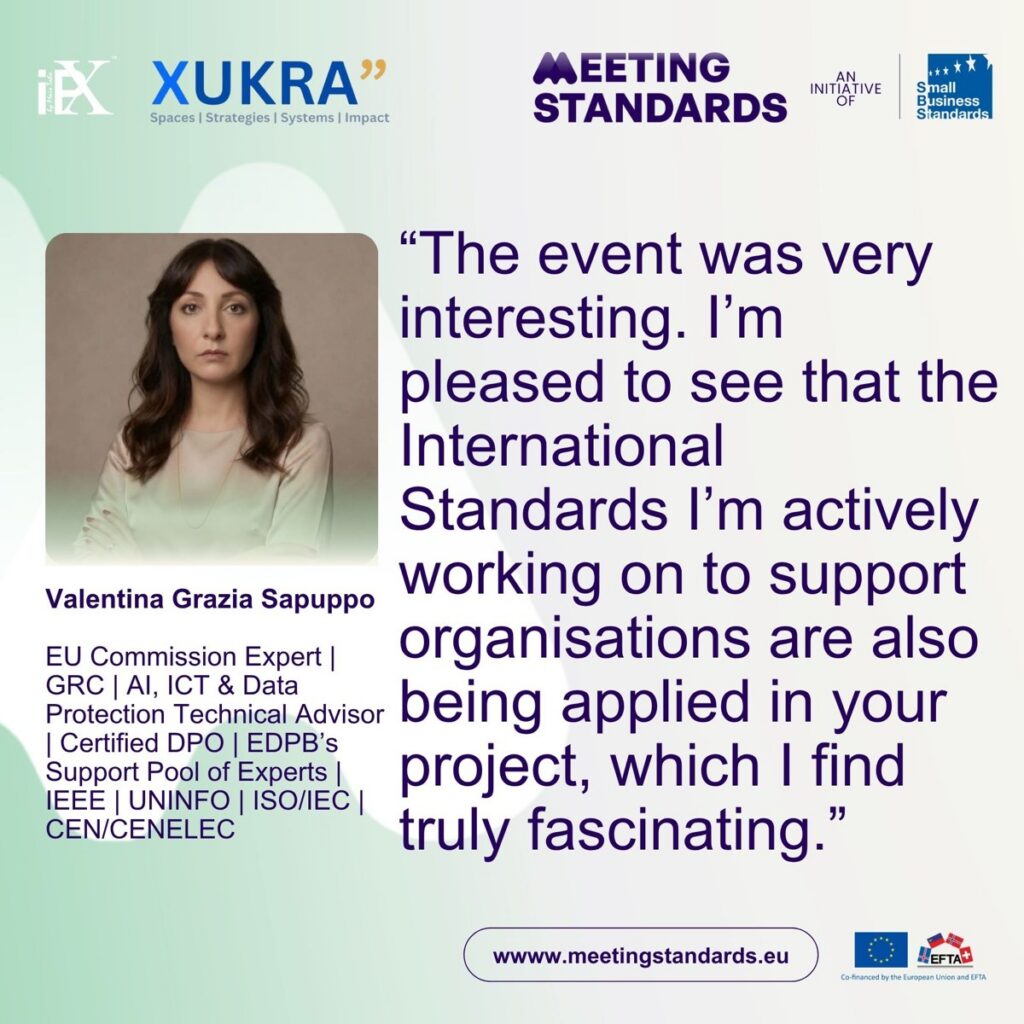
Testimonianza di Valentina Grazia Sapuppo per XUKRA, Meeting Standards 2026 TestimonianzaXUKRA” · Meeting StandardsValentina Grazia Sapuppo ha portato la sua testimonianza al workshop online di XUKRA” nell’ambito di Meeting Standards, l’iniziativa di Small Business Standards che avvicina le PMI europee alla normazione.30 giugno 2026, online · Meeting Standards, 4ª edizioneXUKRA”Meeting StandardsIniziativa europea di Small Business Standards - SBS
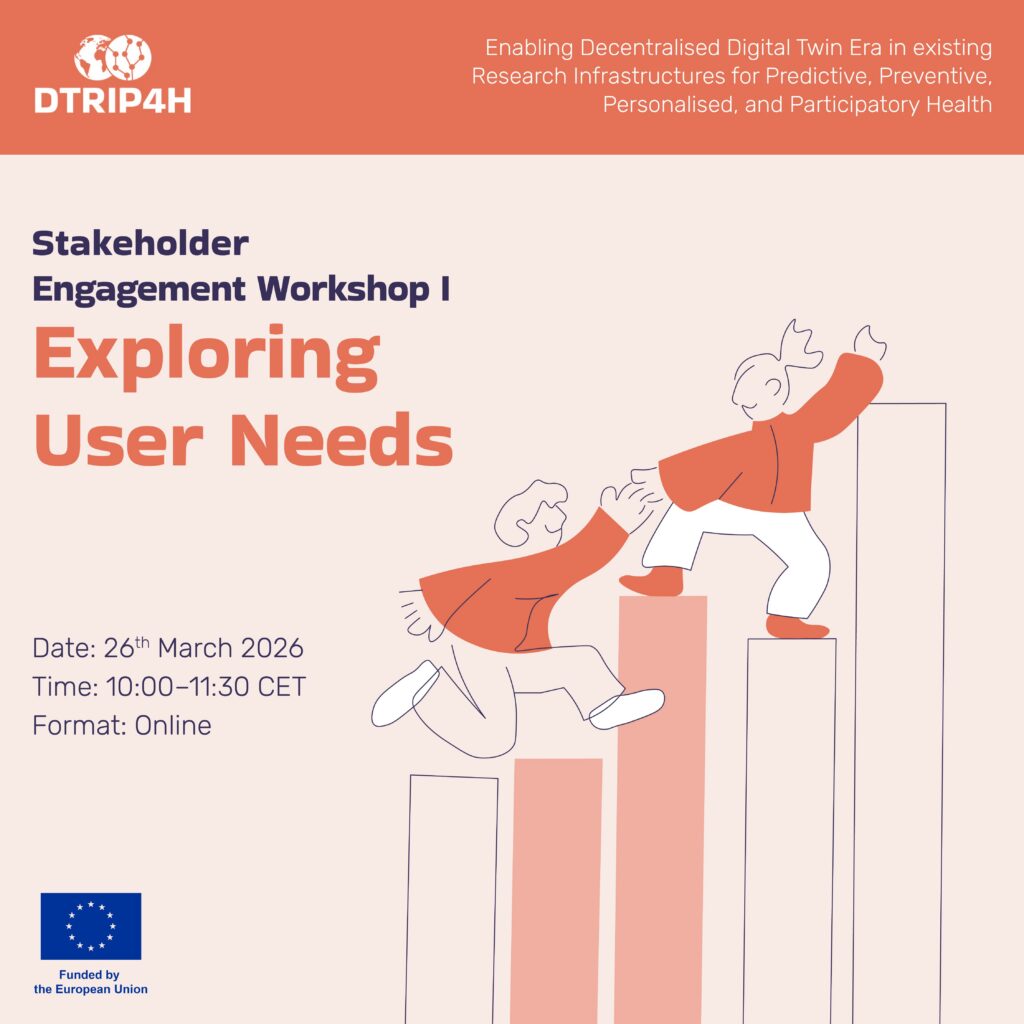
Locandina del workshop DTRIP4H Exploring User Needs, 26 marzo 2026PanelDTRIP4H · Gemelli digitali per la saluteValentina Grazia Sapuppo tra i main panellist del workshop «Exploring User Needs for DDTE: Ethics, Implementation, and the Future of Responsible Simulation» del progetto europeo DTRIP4H, con un intervento su governance, conformità e responsabilità. A giugno ha contribuito come esperto legale al workshop sui fabbisogni formativi.26 marzo e 23 giugno 2026, online · Horizon EuropeIl workshopLa registrazioneDTRIP4H
Intervista Radio Radio IntervistaLegge e colossi del digitaleIl patteggiamento di Meta sui minori non è una condanna. Stati Uniti ed Europa seguono strade opposte, e sugli agenti di IA resta aperta la domanda su chi risponde.Un Giorno Speciale su Radio Radio, con Alessio De Paolis · audio dal minuto 2:26:00Ascolta l’intervistaGuarda il videoLeggi l’articolo
Digital Omnibus ContributoIl Digital Omnibus cambia l’AI ActNuove scadenze per i sistemi ad alto rischio e un chiarimento sull’obbligo di AI literacy: più tempo per adeguarsi, nessuno sconto sulla preparazione di persone e processi.Articolo scritto per il blog di SkillaLeggi su Skilla
Digeat Festival 2026 SpeakerDigeat Festival 2026Valentina Grazia Sapuppo tra i relatori del festival dedicato a protezione dei dati, archivi digitali e regole del futuro. Interviene sul tema «Le regole dell’IA: nuove leggi o principi del diritto?».Venerdì 6 novembre 2026, ore 16:30, Ex Convitto Palmieri, LecceL’interventoLa scheda relatriceIl festival
AI AnthropoCosmic 2026AI AnthropoCosmic 2026Valentina Grazia Sapuppo nel progetto dell’Università Pontificia Salesiana su Persona, Ambiente e Cosmo: moderazione della sessione mattutina del Convegno finale e intervento negli AI Laboratori del Domani su commercio elettronico e IA.14 novembre 2026, online · 28 novembre 2026, Università Pontificia Salesiana, RomaIl convegnoL’incontroIl contributoIl comitato scientificoLa relatriceIl progetto
Testimony by Valentina Grazia Sapuppo for XUKRA, Meeting Standards 2026 TestimonyXUKRA” · Meeting StandardsValentina Grazia Sapuppo’s testimony for the XUKRA” online workshop, part of Meeting Standards, the Small Business Standards initiative bringing European SMEs closer to standardisation.30 June 2026, online · Meeting Standards, 4th editionXUKRA”Meeting StandardsEuropean initiative by Small Business Standards - SBS
Poster of the DTRIP4H workshop Exploring User Needs, 26 March 2026PanelDTRIP4H · Digital twins for healthValentina Grazia Sapuppo among the main panellists of the workshop “Exploring User Needs for DDTE: Ethics, Implementation, and the Future of Responsible Simulation” of the EU project DTRIP4H, speaking on governance, compliance and accountability. In June she contributed as a legal expert to the workshop on training needs.26 March and 23 June 2026, online · Horizon EuropeThe workshopThe recordingDTRIP4H
Interview Radio Radio InterviewLaw and the digital giantsThe Meta settlement on minors is not a conviction. The United States and Europe take opposite paths, and on AI agents the question of who answers remains open.Un Giorno Speciale on Radio Radio, with Alessio De Paolis · audio from 2:26:00 · in ItalianListen to the interviewWatch the videoRead the article
Digital Omnibus ContributionThe Digital Omnibus reshapes the AI ActNew deadlines for high-risk systems and a clarification on the AI literacy duty: more time to comply, no discount on preparing people and processes.Article written for the Skilla blog, in ItalianRead on Skilla
Digeat Festival 2026 SpeakerDigeat Festival 2026Valentina Grazia Sapuppo among the speakers of the festival on data protection, digital archives and the rules of the future. She takes part in the panel «The rules of AI: new laws or principles of law?».Friday 6 November 2026, 16:30, Ex Convitto Palmieri, LecceThe panelSpeaker profileThe festival
AI AnthropoCosmic 2026AI AnthropoCosmic 2026Valentina Grazia Sapuppo in the project of the Università Pontificia Salesiana on Person, Environment and Cosmos: moderator of the morning session of the closing conference and speaker at the AI Laboratori del Domani on e-commerce and AI.14 November 2026, online · 28 November 2026, Università Pontificia Salesiana, Rome · sessions held in ItalianThe conferenceThe sessionThe contributionThe scientific committeeSpeakerThe project