Porta blindata di un caveau con un display luminoso ambra al centro che mostra un punteggio numerico e tiene chiuso il varco, davanti una piccola figura umana: lo scoring automatico che decide l'accesso alla fornitura.

Immagine creata con IAAI-generated image

A score decides the supply: the Garante and the right to know the score

Four companies fined a total of 7.72 million euro because an automated system decided, on the basis of a reliability score, whether or not to activate an electricity and gas supply; and the customers who were turned down could not find out how that score had been built. In its press release of 21 July 2026 the Italian Data Protection Authority (Garante) made public the decisions of 3 July against Hera Comm, EstEnergy, Cerved Group and Experian Italia, and set out a clear principle: anyone refused a service on the strength of automated scoring has the right to understand its logic.

A score that opens or closes access to the contract

The investigations began with reports from citizens who had been denied supply on the basis of a negative reliability score, without being given clear information on the criteria and the logic used to assign it. Hera Comm and EstEnergy, suppliers of electricity and gas, ran a system that gave prospective customers a score to decide whether to proceed with the contract. The Garante found numerous and serious breaches concerning transparency, information to data subjects, data retention and the handling of requests to exercise rights, and imposed 5.8 million euro on Hera Comm and 1.4 million euro on EstEnergy. What is being sanctioned is not the computing power but the opacity: a score that has a concrete effect on a person’s life, namely access to an essential good, cannot remain a closed box.

The logic behind the score, and the right to reach it

Alongside the fines, the Authority ordered corrective measures: more transparent procedures allowing data subjects to understand how the scoring system works, to obtain complete information on the scores assigned and to request rectification of inaccurate data used in the assessments. This is the core of the rules on automated decisions: where a determination that significantly affects a person is based solely on automated processing, the controller must make the underlying logic intelligible, under Articles 13, 15 and 22 of the GDPR. The point deserves attention because private scoring of economic reliability remains a matter of data protection law, whereas social scoring by public bodies falls instead under the AI Act’s prohibition: two separate tracks that converge on the same requirement, whoever judges a citizen with a number must be able to explain it.

Those who supply the data are answerable too: Cerved and Experian

In the same proceeding the Garante also adopted two decisions against Cerved Group, fined 400,000 euro, and Experian Italia, fined 120,000 euro, both involved in supplying the data processed by the scoring system. For each the Authority found serious breaches of the GDPR, including one concerning the data subjects’ right of access; for Experian, also an infringement of the data minimisation principle, having processed data that were not necessary to compute the score. Responsibility, then, does not stop with those who use the score: it runs back to those who feed the model with data, and the compliance chain has to be reconstructed in full, as the shifting perimeter of the very notion of personal data shows.

What is left on the table

In setting the fines the Garante took into account the economic capacity of the companies, the gravity of the breaches, which lasted for about two and a half years, the large number of people involved and the harm suffered by data subjects. For the four companies the immediate outcome is twofold: to pay and, above all, to rewrite procedures and notices so that the customer can understand the score, reach it and correct its premises. For the sector the message is broader: an algorithm that filters access to an essential service must be explainable, the data feeding it must be accurate and reduced to what is necessary, and transparency is not a formal box to tick but the condition for that decision to be lawful. It is one of the areas the Authority’s 2026 inspection plan keeps under watch, and anyone processing reliability profiles would do well to reread their models now.

Author: Valentina Grazia Sapuppo


AI AnthropoCosmic In evidenzaAI AnthropoCosmicUn progetto internazionale per un’IA a servizio dell’Uomo, dell’Ambiente e del Cosmo, che mette al centro la dignità della persona nella progettazione dei sistemi. Leggi l’articoloAI Open Mind AI AnthropoCosmic FeaturedAI AnthropoCosmicAn international project for an AI at the service of humanity, the environment and the cosmos, placing human dignity at the centre of system design. Read the articleAI Open Mind Agentic AI In evidenzaAgentic AILimiti prima dell’azione, evidenze durante, responsabilità dopo. Il volume di Nicola Fabiano sulla governance dei sistemi agentici, con la prefazione di Antonino Caffo.Capitolo 16 a cura dell’Avv. Valentina Grazia SapuppoLeggi l’articolo Agentic AI FeaturedAgentic AILimits before the action, evidence during, responsibility afterwards. Nicola Fabiano’s book on the governance of agentic systems, with a preface by Antonino Caffo.Chapter 16 by Valentina Grazia SapuppoRead the article
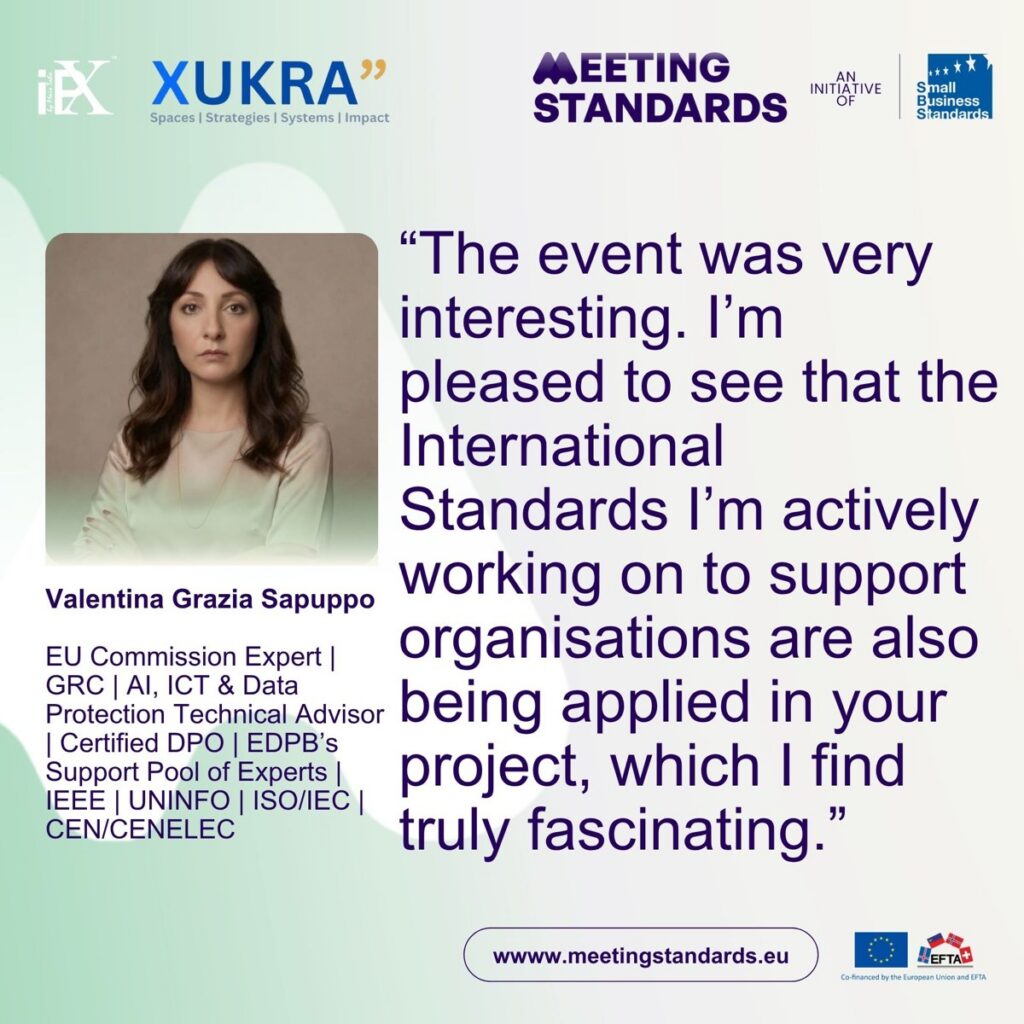
Testimonianza di Valentina Grazia Sapuppo per XUKRA, Meeting Standards 2026 TestimonianzaXUKRA” · Meeting StandardsValentina Grazia Sapuppo ha portato la sua testimonianza al workshop online di XUKRA” nell’ambito di Meeting Standards, l’iniziativa di Small Business Standards che avvicina le PMI europee alla normazione.30 giugno 2026, online · Meeting Standards, 4ª edizioneXUKRA”Meeting StandardsIniziativa europea di Small Business Standards - SBS
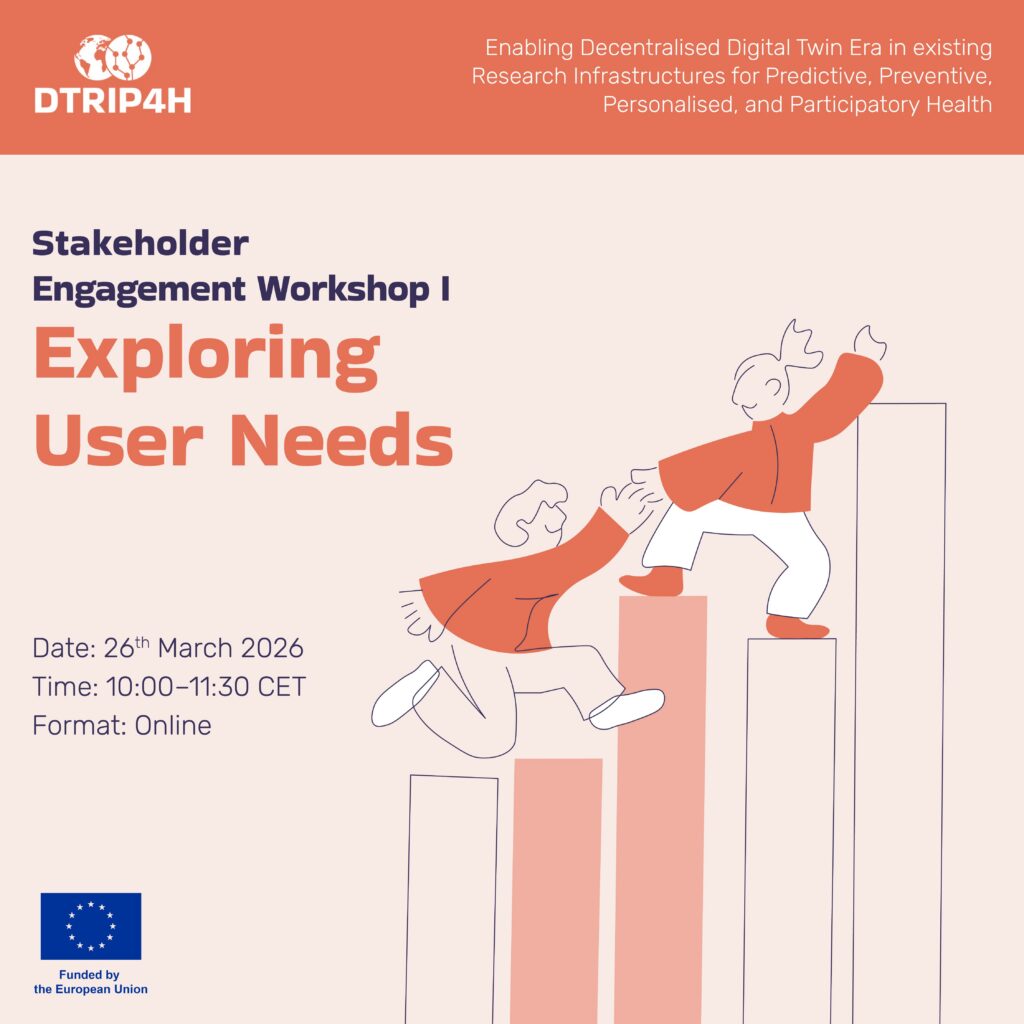
Locandina del workshop DTRIP4H Exploring User Needs, 26 marzo 2026PanelDTRIP4H · Gemelli digitali per la saluteValentina Grazia Sapuppo tra i main panellist del workshop «Exploring User Needs for DDTE: Ethics, Implementation, and the Future of Responsible Simulation» del progetto europeo DTRIP4H, con un intervento su governance, conformità e responsabilità. A giugno ha contribuito come esperto legale al workshop sui fabbisogni formativi.26 marzo e 23 giugno 2026, online · Horizon EuropeIl workshopLa registrazioneDTRIP4H
Intervista Radio Radio IntervistaLegge e colossi del digitaleIl patteggiamento di Meta sui minori non è una condanna. Stati Uniti ed Europa seguono strade opposte, e sugli agenti di IA resta aperta la domanda su chi risponde.Un Giorno Speciale su Radio Radio, con Alessio De Paolis · audio dal minuto 2:26:00Ascolta l’intervistaGuarda il videoLeggi l’articolo
Digital Omnibus ContributoIl Digital Omnibus cambia l’AI ActNuove scadenze per i sistemi ad alto rischio e un chiarimento sull’obbligo di AI literacy: più tempo per adeguarsi, nessuno sconto sulla preparazione di persone e processi.Articolo scritto per il blog di SkillaLeggi su Skilla
Digeat Festival 2026 SpeakerDigeat Festival 2026Valentina Grazia Sapuppo tra i relatori del festival dedicato a protezione dei dati, archivi digitali e regole del futuro. Interviene sul tema «Le regole dell’IA: nuove leggi o principi del diritto?».Venerdì 6 novembre 2026, ore 16:30, Ex Convitto Palmieri, LecceL’interventoLa scheda relatriceIl festival
AI AnthropoCosmic 2026AI AnthropoCosmic 2026Valentina Grazia Sapuppo nel progetto dell’Università Pontificia Salesiana su Persona, Ambiente e Cosmo: moderazione della sessione mattutina del Convegno finale e intervento negli AI Laboratori del Domani su commercio elettronico e IA.14 novembre 2026, online · 28 novembre 2026, Università Pontificia Salesiana, RomaIl convegnoL’incontroIl contributoIl comitato scientificoLa relatriceIl progetto
Testimony by Valentina Grazia Sapuppo for XUKRA, Meeting Standards 2026 TestimonyXUKRA” · Meeting StandardsValentina Grazia Sapuppo’s testimony for the XUKRA” online workshop, part of Meeting Standards, the Small Business Standards initiative bringing European SMEs closer to standardisation.30 June 2026, online · Meeting Standards, 4th editionXUKRA”Meeting StandardsEuropean initiative by Small Business Standards - SBS
Poster of the DTRIP4H workshop Exploring User Needs, 26 March 2026PanelDTRIP4H · Digital twins for healthValentina Grazia Sapuppo among the main panellists of the workshop “Exploring User Needs for DDTE: Ethics, Implementation, and the Future of Responsible Simulation” of the EU project DTRIP4H, speaking on governance, compliance and accountability. In June she contributed as a legal expert to the workshop on training needs.26 March and 23 June 2026, online · Horizon EuropeThe workshopThe recordingDTRIP4H
Interview Radio Radio InterviewLaw and the digital giantsThe Meta settlement on minors is not a conviction. The United States and Europe take opposite paths, and on AI agents the question of who answers remains open.Un Giorno Speciale on Radio Radio, with Alessio De Paolis · audio from 2:26:00 · in ItalianListen to the interviewWatch the videoRead the article
Digital Omnibus ContributionThe Digital Omnibus reshapes the AI ActNew deadlines for high-risk systems and a clarification on the AI literacy duty: more time to comply, no discount on preparing people and processes.Article written for the Skilla blog, in ItalianRead on Skilla
Digeat Festival 2026 SpeakerDigeat Festival 2026Valentina Grazia Sapuppo among the speakers of the festival on data protection, digital archives and the rules of the future. She takes part in the panel «The rules of AI: new laws or principles of law?».Friday 6 November 2026, 16:30, Ex Convitto Palmieri, LecceThe panelSpeaker profileThe festival
AI AnthropoCosmic 2026AI AnthropoCosmic 2026Valentina Grazia Sapuppo in the project of the Università Pontificia Salesiana on Person, Environment and Cosmos: moderator of the morning session of the closing conference and speaker at the AI Laboratori del Domani on e-commerce and AI.14 November 2026, online · 28 November 2026, Università Pontificia Salesiana, Rome · sessions held in ItalianThe conferenceThe sessionThe contributionThe scientific committeeSpeakerThe project