'/%3E%3C/svg%3E)
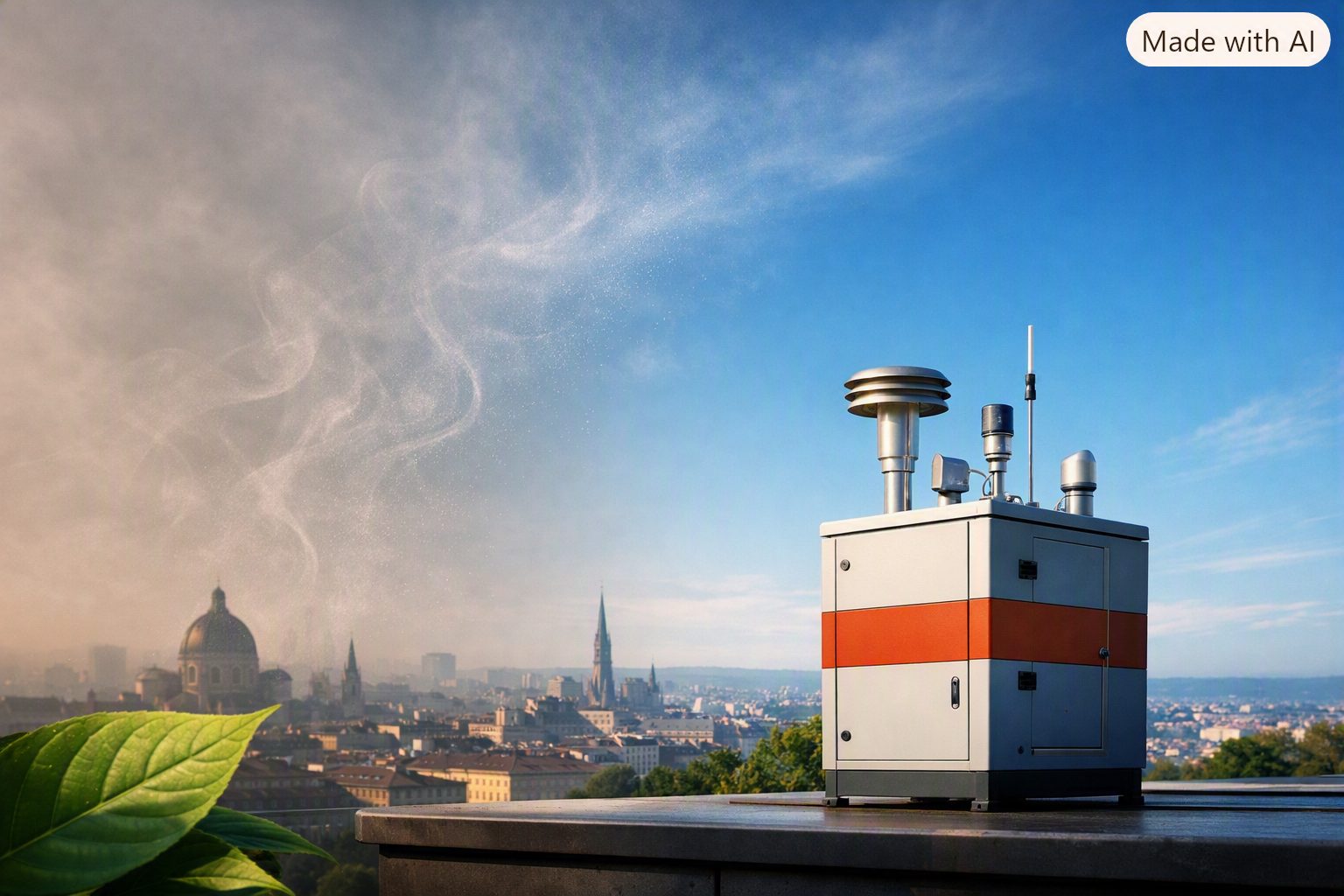
On 30 April 2026 the European Environment Agency (EEA) published the report “Air quality status in Europe 2026”, which measures the concentrations of air pollutants recorded in 2024 and 2025 against the European Union standards in force, the values set for 2030 by the Ambient Air Quality Directive and the guideline levels of the World Health Organization (WHO). The picture is one of multi-year improvement alongside still widespread exceedances, concentrated in particulate matter, ground-level ozone and benzo(a)pyrene.
The report and the 2024 and 2025 data
The document (Web report No 01/2026) is the first in the “Air quality in Europe 2026” package and updates the EEA’s annual assessment of air quality status. The analysis covers 39 countries: the 27 Member States of the European Union, five other EEA member countries (Iceland, Liechtenstein, Norway, Switzerland and Türkiye), six cooperating countries (Albania, Bosnia and Herzegovina, Kosovo, Montenegro, North Macedonia and Serbia) and Andorra as a voluntary reporting country. Air pollution remains, according to the EEA, Europe’s greatest environmental health risk, even though it has fallen steadily over the past two decades thanks to European, national and local legislation to reduce emissions.
In 2024 more than 12% of monitoring stations recorded, for each of these three pollutants (particulate matter PM10, ozone and benzo(a)pyrene), concentrations above the EU standards currently in force; overall, up to 20% of stations still exceed those standards. Concentrations of fine particulate matter (PM2.5) and nitrogen dioxide (NO2) are, by contrast, met in most regions. For other pollutants the situation is more favourable: cadmium is within the limits in all countries considered, while for sulphur dioxide (SO2), carbon monoxide, lead, arsenic and nickel only a few stations record values above the standards.
The comparison with WHO guideline levels
The report also compares the data with the air quality guideline levels set by the WHO in 2021, which are generally stricter than the Union’s legally binding standards. Against these levels the number of compliant stations is small: for fine particulate matter (PM2.5) only 166 stations out of 2,223 were within the annual guideline level, and for ozone only 53 out of 2,053 were within the peak-season guideline level. The EEA estimates that more than 90% of the European Union’s urban population is exposed to concentrations above the WHO guideline levels, with a higher risk of respiratory and cardiovascular diseases.
Ground-level ozone and the link with the climate
The EEA devotes a separate briefing to ground-level ozone, “Addressing ground-level ozone pollution in Europe”. Ozone levels have not fallen significantly, despite the overall reduction in emissions of the main precursor pollutants. Ozone is not emitted directly but forms in the lower atmosphere when sunlight triggers photochemical reactions between nitrogen oxides (NOx) and volatile organic compounds, which makes reducing it more complex than for other pollutants. The briefing notes that climate change is expected to worsen ozone pollution, owing to the greater frequency and intensity of hot conditions that favour its formation.
According to the data cited by the EEA, 63,000 deaths in the European Union can be attributed to ground-level ozone, alongside economic losses of the order of billions of euro due to reduced crop yields; ozone also contributes to global warming as a greenhouse gas. Because ozone and its precursors can travel long distances, the EEA stresses that action at national and local level must be accompanied by European and international cooperation against transboundary pollution.
The 2030 standards and Directive 2024/2881
Directive (EU) 2024/2881 on ambient air quality and cleaner air for Europe entered into force on 10 December 2024 and sets new and revised standards to be attained by 1 January 2030, more closely aligned with the WHO guideline levels than the current ones. Comparing the 2024 data with these future standards shows that for some pollutants, such as nitrogen dioxide (NO2) and sulphur dioxide (SO2), most stations are already below certain revised values. For particulate matter the distance remains significant: in 2024 more than 30% of stations recorded concentrations above the revised standards. The EEA points out that this analysis measures the distance to target and is not a compliance assessment, since the 2030 standards do not yet apply.
The directive also introduces an early warning mechanism: if between 2026 and 2029 pollution levels exceed the 2030 standards, Member States must assess whether they are on track to comply and, if not, draw up air quality roadmaps with measures capable of ensuring compliance by 2030. The year 2026 therefore marks the start of the window in which these national plans may become mandatory in areas where concentrations remain above the thresholds.
The health and economic cost
The EEA reiterates that air pollution is Europe’s greatest environmental health risk, with a substantial burden of disease and associated economic costs. Citing the report “Europe’s Environment 2025”, the Agency reports the estimate of a 2024 study, based on EEA data, according to which air pollution costs the Union’s Member States around EUR 600 billion a year, equal to 4% of gross domestic product, including working hours lost to absences linked to pollution-related illness. Reducing concentrations, the EEA observes, delivers both health and economic benefits. Data on health impacts, including estimates of premature deaths, will be published later in 2026 as part of the “Air quality in Europe 2026” package.
Outlook
The standards set for 1 January 2030 by Directive (EU) 2024/2881 are the reference threshold against which progress is measured. Between 2026 and 2029 Member States are required to assess their own trajectory and, where necessary, adopt air quality roadmaps; the EEA also expects the number of monitoring stations to increase in order to meet the new requirements. What remains to be defined is the operational content of the national plans, the strengthening of cooperation against transboundary ozone pollution and the publication, expected during 2026, of updated estimates of health impacts.
In dialogue with the 2030 Agenda
- Goal 3 (Good Health and Well-being). The EEA identifies air pollution as Europe’s greatest environmental health risk, affecting respiratory and cardiovascular disease.
- Goal 11 (Sustainable Cities and Communities). More than 90% of the Union’s urban population is exposed to concentrations above the WHO guideline levels, with wide territorial differences.
- Goal 13 (Climate Action). Ground-level ozone is a greenhouse gas and warming worsens its formation, creating a direct link between climate policy and air quality.
Sources
- European Environment Agency, Air quality status in Europe 2026
- European Environment Agency, press release of 30 April 2026
- European Environment Agency, Addressing ground-level ozone pollution in Europe
- Directive (EU) 2024/2881 on ambient air quality and cleaner air for Europe
- World Health Organization, WHO global air quality guidelines (2021)